Wednesday, January 27, 2016

Historical Food Fortnightly: Culinary Vices

Vice is such a relative term. Today's diets veer between no fats, no carbs, no gluten, no sugar. For many of our ancestors, budget would have been a larger factor than health. Food out of season would have been impossible to get or very expensive to ship. Foods that we consider sinfully decadent like lard or heavy cream would have been relatively inexpensive and easily available.

At the moment, budget is a big factor in my cooking, both historic and modern, but I was able to find a luxurious recipe from The Court and Country Confectioner (1770) that seemed to fit this month's challenge.


Year/Region: 1770/London

How Did You Make It: I halved the recipe, so I juiced 3 oranges to make 1 cup (1/2 pint) and stirred with 2 eggs and an extra yolk. I considered using less sugar, but went with the full half pound of granulated. I stirred it all over a double boiler with 1/4 orange peel until it set up into a thin (very, very, very thin) custard.


Time to Complete: I'm so bad at losing track of time when I cook. Fifteen minutes maybe?

Total Cost: Probably less than a dollar. The oranges were a gift shipped from Florida.

How Successful Was It? Not terribly. The recipe was very good about using actual measurements (1 pint of orange juice vs the juice of X oranges), so I knew I was following the ratios. For my preferences, there simply wasn't enough egg in the juice to make anything thicker than the consistency of eggnog. I had hoped for a firmer custard or something along the lines of a lemon curd. I could have definitely halved the sugar, but stuck with the recipe. LB said "That's weird" and then suggested that "we" make some shortcakes or an unsweet white cake to soak up the custard. I let it set up a bit then added some melted butter in the hopes of giving it more firmness and make it more like a curd.

How Accurate Is It? Middling. The biggest difference is that the recipe called for Seville oranges, and I used a modern hybrid. Sevilles are bitter oranges, the kind for making marmalade. I've no idea where to buy them. I otherwise followed the recipe faithfully although I opted to cook over a double boiler, having always made custards thus. I tasted the results before trying to tweak it a bit into more of something I actually wanted to eat.


Thursday, January 14, 2016

Historical Food Fortnightly: Meat & Potatoes

SAVORY POTATO BALLS

A series of factors led me to chose this recipe from The Cook's Oracle. I'd been called on at the last minute to cook for the Battle of New Orleans reenactment and realized I needed to scroll back the dates of recipes I'd been using. In the bit of last year's challenge I completed, I tended to focus on the Civil War. Finally, I was looking for a recipe that was extremely budget conscious. Extremely.

I was thrilled to find this one. Once I began it, I realized how similar it was to one of my most favorite breakfast recipes, Potato Bacon Scones. Seriously, it's nearly identical. 
 Year/Region: 1817/London

How Did You Make It: I mashed the potatoes with some butter and milk, diced the ham, and added the egg yolks. The resulting mixture was much too soft to form into balls, so I did mix in a bit of flour to stiffen it up a bit before rolling about 2 Tablespoon's worth in flour as called for "in the last receipt."


 I never did make successful balls, as the potato mixture flattened as soon as it hit the hot grease. I fried them until well browned. I was a bit confused by the recipe's call to "brown them in a dutch oven" as the frying process browned them so much. I skipped that step unless the recipe actually meant to do the frying in a dutch oven. 


Time to Complete: I boiled the potatoes for 20 minutes, mashed them and let them cool another 20 minutes. The fry time took maybe a total of 20 minute as I worked in batches. Total time: 1 hour.

Total Cost: I spent $1.38 on two potatoes. The ham had been a great deal before Xmas at 89 cents a lb. and the recipe used 1/4 lb. I used 2 T of butter and splash of milk, so probably another 30 cents. I can't really calculate the cost of a bit of flour. The bacon grease was free. Total: $1.91. 

How Successful Was It?: Moderately successful.  Because I was rushing, I didn't scroll back in the book to see the instructions for how to mash potatoes. 

 Their mashed potatoes use far less butter and milk than we do today, so their mixture would have been firmer. I was unable to shape the mixture into balls. There was no seasoning in the mixture either, so they were a bit bland for the modern palate. I sprinkled them with kosher salt after frying. Those are really picky critiques though; these were delicious. I ate three and LB immediately ate six and later went back for more.


How Accurate Is It?: Very. I used all of the recipe's ingredients as described, all the way down to the "clean drippings."  This is some gorgeous grease:


Writing Forthcoming

Soon! I am having significant connectivity issues at home. In addition, I have been travelling extensively since mid-December. Once I got back home, I was scrambling to catch up in an online course (I finished!) and prep for the new semester (haven't even begun that bit beyond ordering the texts).

I've signed up for the Historical Food Fortnightly and strongly considered dropping out due to the insane demands on my pocketbook and time right now. Still, I managed to meet challenge one with only the purchase of a couple of potatoes, so I'll be back soon with the post.

Tuesday, April 28, 2015

10 on Tuesday: 10 Things I Did Last Week

Some days, I feel like I've nothing to say when I update my journal, but I actually did manage to do quite a bit last week.

1) I've started helping to teach an Irish dance class, focusing on the ceili dancing. It was my first dance form, but I haven't had to break it down to teach before. I'm slowly discovering the vocabulary I need.

2) I posted a poem on my Facebook page every single day for National Poetry Month. Some have personal resonance for me, some don't. I have enjoyed them all.

3) I drank a deliciously chilled retsina; a mojito; and many, many hard ciders, one of which was a locally brewed raspberry. This week I may rest my liver a bit.

4) I cooked several palatable meals for vegan houseguests. Vegetarian is easy. Vegan is much, much harder.

5) I napped, probably an average of two a day, sometimes more, sometimes less. I'm starting to think my current insomnia jag is age-related. We'll see. I'm feeling surprisingly functional and sane for so little sleep, which is odd for me.

6) I met a friend to walk our dogs in the park. I need to do that much more often than I do.

7) The dog and I finished up our final tricks class with a private lesson from the trainer. After a month, I came away with 3 or 4 new tricks to work on and a renewed love of working with my boy.

8) I'm not saying. A girl gets to have a few secrets here and there.

9) I took apart and cleaned a 1910s banjo.

10) I was a rock star.

Tuesday, March 31, 2015

Ten on Tuesday: 10 Favorite Sandwiches

I'm so glad the Ten on Tuesdays have been all about food of late. I always have something to say about food.

Ten Favorite Sandwiches: I'm not actually much of a sandwich eater. I'm more likely to eat lunch meat with cheese and hold the bread, even since childhood. I was hard pressed to come up with ten, but one forges onward:

  1. Subway's 6" Veggie: I get it without cheese and on whole wheat when I'm feeling virtuous. I load it with briny stuff (banana peppers, tomatoes, vinegar, salt & pepper, herb mix). It's essentially just a lettuce sandwich, but I don't care.
  2. Bahn Mi:  I could eat a bahn mi twice a day every single day and still wake up in the night wanting more. Actually, I'd probably wake up in the middle of the night because I have the bad habit of adding extra fish sauce to my bahn mi.
  3. Egg White Delight McMuffin: I cheered when McDonald's created these. They actually don't taste that great, but I still seem to eat them on a regular basis. There's the added benefit of feeling somewhat healthy when I eat them.
  4. Fried Egg with Ketchup: Apparently some people eat their fried egg sandwiches with mayonnaise. I choose not to associate myself with such cretins.
  5. Peanut Butter and Bacon: I've been eating these since childhood and would rather have one of these than a BLT any day. I don't know if it was just something my family ate, but it's a great flavor combination.
  6. Lebanon Bologna: Lebanon bologna is a Pennsylvania lunch meat, a sort of vinegary salami, that I used to splurge and mail order. The Boar's Head brand now available here isn't as good as the real stuff, but it'll do.
  7. Grilled Pimento Cheese on Pumpernickel: I began ordering these in college at a local restaurant and now make them whenever I get a chance or excuse. Add a slice of ripe tomato and try not to let the hot cheese burn your chin as it squeezes out of the toasted bread.
  8. Watercress: Peppery and delicious and great on whole wheat.
  9. Cucumber: Slather some extra-thin Pepperidge Farm white bread with softened butter, run the cucumber through a mandoline, raise your pinkie finger, and dig in.
  10. Soft-shelled crab: My all-time favorite sandwich. Squishy white bread, plenty of mayonnaise, and what looks like a breaded, deep-fried spider. What's not to love?

Thursday, March 26, 2015

Obligatory Knitting Content

I actually have been knitting and knitting a lot. I need to reach a certain income threshold due to Missouri's butt-headed insistence on turning down Medicaid expansion, and knitting is helping me do that.

Commission after commission has flowed from my fingers, the latest being the Katniss vest/cowl from The Hunger Games. My sister now wants one, and I do too. One of my friends said I looked badass in it, a good thing to be now and then. This one is going off to live with one of Steu's trainers.


I've got two more commissions in the pipeline, but am taking a break to knit for myself for a bit.

I picked the Revel Modular Kerchief, for which I picked up some souvenir yarn in Warrenton, VA this past Christmas. In many ways, it's a very simple pattern: just a garter-stitch triangle with a knitted-on garter border, all designed to make the best use of the long color repeats.

The pattern is so simple, however, that I have managed to mess it up three times, accidentally skewing the center increase. Hours of work down the drain. I'm finally back on track, but may stick with the fiddly stuff in the future. Harder is somehow easier.

Tuesday, March 24, 2015

Ten on Tuesday: 10 Favorite Kinds of Cheese.

A friend nudged me to blog again, I'd been having strong writing urges anyway, and today's 10 on Tuesday was perfect for me.

So here I am. Again.

I had a long talk this weekend about food choices with a friend who has recently gone vegan. I've actually been eating fairly healthy for me, but find that I do best with a high-protein, low-carb diet.

I generally give up cheese and all dairy products for the month of December to save my voice, but I probably think about cheese during that time the way a smoker trying to kick the habit thinks about cigarettes. I don't think I could ever go vegan.

  1. Raclette: All the accoutrements! The grill, the little trays, the side dishes! The melty, gooey goodness! The conversation! 
  2. Stilton: I love all blue cheeses, and probably could have written a list of my top 10 blue cheeses alone, but I settled for only three, all ridiculously expensive. Beyond the taste, and the semi-dry crumbly texture, I love the color of Stilton. There's no other cheese that has quite that shade of yellow. I also love tracing the puncture veins and nibbling out the blue.
  3. Cabrales: A Spanish blue, not for the faint hearted. I love it best warmed and melted with a filet, but it's also good in mashed potatoes, or cold with endive or just in chunks. It's definitely the most intense cheese on this list.
  4. Roquefort: This one combines two of my loves: blue veining and a high cream content that just coats the mouth. 
  5. St. Andres: Speaking of high cream content. Brie is for newbies; you can buy brie at Walmart, for pete's sake. Go with a triple creme every chance you get.
  6. Brillat Savarin: Another triple creme. I love it also for its namesake, who said "Tell me what you eat, and I will tell you what you are."
  7. Bulgarian Feta: Not French. Definitely not Greek. Always pick Bulgarian feta. Something about it has the perfect degree of brininess and intensity.
  8. Kefalotiri: The Greek cheese used in saganaki. Enough said.
  9. Cabecou: My favorite illegal cheese. It's a tiny little thing, but so full of complex flavors from the rind to the puddling center. Plus, you're left with a handy terracotta dish at the end.
  10. Pimento: I bet you thought this list would be all gourmet. Nope. Homemade pimento cheese is cheese nirvana for me.

Sunday, December 14, 2014

Outstanding Barters

I love to barter, but it's occurred to me that I've got quite a few outstanding ones right now and wanted to note them down lest I forget.


  • TL--norwegian cap for some madder yarn

  • CV--sortie cap for something lovely
  • NG--undersleeves for pasteboard box
  • BL--undersleeves for wheel cap/cart
I'm not in a huge hurry, but didn't want to totally lose track.

Tuesday, October 14, 2014

Historical Food Fortnightly, Challenge 10: Let Them Eat Cake (plus bonus grub!)

This semester is kicking my butt, so I've had to let fun stuff slide--fun stuff like eating home-cooked food.  I did actually make three historic dishes for my book club last month, to go with Alias Grace by Margaret Atwood.  I can't really figure out where they would fit into the challenges, so here they are all at once.

SHREWSBURY CAKE


Year/Region: 1855; Hartford, CT

How Did You Make It: I had noticed this recipe in The Improved Housewife: Or, Book of Receipts; with Engravings for Marketing and Carving by Mrs. A.L. Webster, a married lady, when I was looking for "foreign" names. The recipe jumped out at me because it's the name of a nearby road.


I followed the recipe faithfully, although if you notice, the recipe doesn't say at what temperature or for how long to cook the cake (which is actually more like a cookie). In fact, it doesn't mention cooking at all. I ended up baking at 350 for about 12-15 minutes. I sprinkled the cakes with powdered sugar both before and after baking.

Time to Complete: Because I had 3 dishes to make, I spent a big chunk of the morning cooking and worked on multiple dishes simultaneously. This one probably took about an hour from start to finish.

Total Cost: I had all the ingredients on hand.

How Successful Was It?: The large number of eggs make for a cake-like, slightly dense crumb. I loved the delicate flavor of the rose-water, but didn't love the texture as much. I have a feeling my book club members were slightly less than enthusiastic about any of these dishes, but they really weren't designed for a modern palate. There were plenty of leftovers, which surprisingly never seemed to go stale. I feel they're kind of a generic cookie/cake.

How Accurate Is It? I used an electric mixer and a convection oven. I also used silpats instead of buttering the cookie sheet. Otherwise, it's an authentic recipe. The eggs were from our birds.


CHICKEN SALAD


Year/Region: 1855; Hartford, CT

How Did You Make It: I wanted a protein for my book club spread, but didn't want anything too heavy, hot, or messy. I've had this chicken salad before and quite like it. Again, it's from The Improved Housewife.


I decided to double the recipe since I was cooking for a crowd. I boiled some boneless, skinless chicken breasts. It's nearly impossible these days to buy a chicken of that size; roasting chickens today are just massive.  I used cider vinegar and prepared yellow mustard. Instead of essence of celery, I used celery seed, which was suggested as a substitute in another recipe in the same book. I also opted to serve it on a bed of lettuce and tomato for color and put a basket of dinner rolls nearby for anyone who preferred a sandwich.

Essence of celery seems like a fascinating foodstuff we've completely lost:


Time to Complete: Maybe an hour, the bulk of which was waiting for the water to come to a boil.

Total Cost: It's been a few weeks, but I do recall that I winced at the price of chicken. I had everything else on hand.

How Successful Was It?: I've always liked boiling chicken. It's so fast and easy and not messy in the way that frying is. Today, we expect to have mayonnaise-based chicken salad, but this was lovely, if a bit dry. As my DH and I worked away at the leftovers, I tended to mix in a bit of mayo.

How Accurate Is It? Fairly accurate. I used chicken breasts only instead of a whole bird. The eggs were from our chickens. The one substitute I made was a period one.

PERSIMMON PUDDING


Year/Region: 1870; Oxford, NC

How Did You Make It:  I wanted a third dish and recalled I had a lot of persimmons on hand that I could put to good use. I cast about and came up with this recipe from Mrs. Elliott's Housewife: Containing Practical Receipts in Cookery by Sarah A. Elliott.


I had harvested local persimmons last fall and was able to raid the freezer. The day we harvested, a friend and I gathered all we could and tried several labor-intensive methods before finally settling on a chinois, those cone-shaped strainers you sometimes see in junk stores. We each ended up with three gallons of pulp and I've been gradually trying different recipes. I opted for the cornmeal option and baked in a pyrex 9x13 baking pan.

Time to Complete: Well, if you count the persimmon bit, for-freaking-evah! Otherwise, I ended up looking up a more modern pudding recipe and baking for about 40 minutes.

Total Cost: I had everything on hand. At this point, if you've done the math, you'll notice that I have used 17 eggs in just these three dishes!

How Successful Was It?: Moderately. I found that I don't really love persimmon and have a feeling the book club members didn't either. It has a distinct taste that lingers. The texture of this is also something modern eaters aren't used to--dense and quite moist. That said, I generally love puddings. It transported and held up well. I took to serving very small pieces at breakfast time. The chickens eventually enjoyed the last of the leftovers.

How Accurate Is It? As far as I can tell, very. I hand-harvested and hand-processed the persimmons, and they were a local variety from a nature reserve nearby. I followed the recipe faithfully.

There you go. Lord knows when I'll get a chance to cook again.

Friday, August 08, 2014

Historical Food Fortnightly, Challenge 5: Pies

I honestly thought I would not be able to do this challenge. I'm pushing up on a zillion deadlines and had three out-of-town trips in less than two weeks. Then last night, our neighbor brought us over a massive bowl of peaches from his tree, and I found myself doing what I always do--reaching for my grandmother's Fannie Farmer Cookbook to find what I could make with on-hand ingredients. Voila, peach pie!


Date/Year and Region: 1939, Boston

How did you make it?: I went with the peach crumble pie. Over the past few years, I've been making a peach cobbler from Cooking from Quilt Country, which is delicious. We've gotten a bit bored with it, however, and this one seemed like a fun possibility. Plus, even though the recipe title says "pie," there's no actual crust. Given my time constraints, there was a lot about this recipe I found appealing.

First, I did a 30-second boiling water/ice water plunge to help with peeling the peaches. This step wasn't mentioned in the recipe, but it's what I've always done with tomatoes and peaches.


Then I sliced them and put them in my pie pan. The recipe calls for the glass pan, but I wanted to use my stoneware one as it holds more. I had a LOT of peaches to use up. In fact, I've got some peach jam cooking away right now as well and still have nine more peaches. Fortunately, they're freestone peaches, which makes them easy to slice. Look how gorgeous!


The recipe called for creaming the butter, but for some reason I chose to cut it in with a pastry cutter. 


I sprinkled the crumble over the peaches and popped it in the the oven for 35 minutes. We have a commercial convection oven, so I generally cook for less time than any printed recipe.

Time to Complete: Less than one hour. The most time consuming bit was preparing the peaches.

Total Cost: Zero out of pocket. I had all the ingredients on hand, and the peaches were free.

How Successful Was It?: I've discovered I like a little more complexity of flavor in my peach pie. It's good, but I would probably add some salt to the crumble and perhaps some brandy or almond extract to the peaches. A little nutmeg wouldn't hurt either. That said, as soon as I'm done typing, I'm going back for seconds.


How Accurate Is It?: Very. I followed the recipe faithfully. I did use a modern oven.

Saturday, August 02, 2014

Craft It Forward 2014, v3.0

I sent off the second round of craft-it-forward gifts this week. One (Joe R) hasn't gotten back to me with what he wanted, but I sent off cooling neckbands or washcloths to the others. When Mindy posted she was crafting it forward again, I jumped on it. Her stuff is awesome. I was surprised at how quickly my spots filled up, but I'm sending to Ann M, Erin S, Kama B, Linda Y, Mary W, and Mrs. G as a bonus.

A few ideas are percolating in my head, but time will tell.

Thursday, July 24, 2014

Historical Food Fortnightly, Challenge 4: Foreign Foods

Last entry's chop suey would have been perfect here, and I'm still reading the book (one last chapter to go), but the main reason I decided on doing these challenges was to get more comfortable with nineteenth-century cooking. I decided to return to The Improved Housewife: Or, Book of Receipts; with Engravings for Marketing and Carving by Mrs. A.L. Webster, a married lady. 

I perused the table of contents and found the following terms: Spanish, Scotch, French, Tunbridge, Rousse, East India, and Iceland. I was really excited about the Tunbridge cakes, but further research revealed that Tunbridge was in Vermont, while Tunbridge Wells was in England. There was an intriguing reference to roasting coffee the French way, but I don't drink coffee and my husband was less than enthusiastic about helping with the preparation.

 Eventually, I settled on Spanish Fritters. I'm terrified by yeast, but since I entered the challenge to stretch myself, I figured this would be a good choice. As a bonus, these didn't seem to require kneading. Besides, anything tastes better when deep fried.


Mrs. Webster was quite the plagiarist; the same recipe appears in The Virginia Housewife in 1828. Spanish fritters appear in a number of historic cookbooks, without much in common beyond the frying.

This one from 1758 looks like French toast:
 
This one from 1806 sounds like a deep-fried pate a choux:


This one from 1833 is definitely French toast (an earlier edition dates to 1808):


 This one from 1854 is entirely different:


Anyway, you get the idea. Some kind of dough, deep fried. Yum! Doesn't this look delicious?


Date/Year and Region: 1847, Hartford, CT

How did you make it?: I followed the recipe fairly faithfully. Because it only called for one egg, I couldn't really halve it. I combined 4 cups of flour with 1 packet of yeast, a pinch of salt, and one egg.  I then scalded about 2 cups of milk (the recipe doesn't call for this step, but I knew the milk should be warm for the yeast to rise well) and kept adding milk until the dough had what I thought was a muffin-like consistency (1 1/2 cups). 


I set the dough to rise for an hour, added 2T of melted butter, and set it to rise again for 30 minutes. 

I heated the lard to 375 (the temperature recommended for modern donut recipes) and used a serving spoon to pull off walnut-sized chunks of dough. They tended to be ready to flip after about 1 minute per side.

I sprinkled a few with cinnamon sugar (as in the 1758 recipe) but have yet to try the other sauces.

Time to Complete: I let the dough have a first rise for one hour. Although the recipe didn't call for it, I gave the dough a second rise of about 30 minutes since mixing in the butter caused quite a bit of deflation. Each batch of fritters took about 2 minutes to form and fry up. Total time was probably slightly less than 2 hours.

Total Cost: Out-of-pocket expenses were zero. I happened to have some lard in the fridge and this recipe was a perfect way to clear it out.

How Successful Was It?: Surprisingly only so so. I wasn't expecting them to be so bland. Unlike a donut, there's no sugar in the dough and with my decision to interpret "a little salt" as just a pinch, there just isn't a lot of taste. Both the sauces recommended would be quite strong tasting, however, so perhaps they are merely a vehicle for sauce.  If I got lazy and didn't make my dough walnut-sized, the insides tended to be a bit gummy as well.

How Accurate Is It?:  Very accurate. I did make it "early in the morning." The egg came from our own antebellum-breed, backyard chickens. I used a packet of instant-rise yeast. I did fry them in lard. Period cooks would have fried a bit of bread to check for temperature, but I used a digital thermometer. My favorite bit of accuracy was that I got to use my yellowware dough bowl, which my mother recently passed it to me.  She had used it to make bread when I was a child, and it's clearly a family piece with no markings. Someone at some point dinged it with electric beaters, but I was delighted to set the dough to rise in it.


Monday, July 07, 2014

Historical Food Fortnightly, Challenge 3: Today in History

For me, this challenge exemplifies the absolute rabbit hole that is historical research and some of the lessons I teach my students in my writing classes. I didn't really know which date to pick, but didn't want to do a patriotic or obvious date. I happened to glance at my blues calendar and noticed all the musician birthdays or death dates within this fortnight: Georgia Tom Dorsey, Willie Dixon, Mississippi John Hurt, Mississippi Fred McDowell, Smiley Lewis, Louis Armstrong, and Casey Biill Weldon. Great, I thought, I'll look up some blues tunes to see if there are any that fit. I'm always up for some great double entendre blues.

I didn't find much until I hit Louis Armstrong, who was actually quite the foodie, even signing all his letters, "Red beans and ricely yours ..." I looked through his list of songs and saw references to cheesecake and bbq, but I ultimately opted to be inspired by "Cornet Chop Suey," which lacking lyrics, also lacks my beloved double entendres.


I initially misread the calender and thought Armstrong was born on July 4, something he himself believed his whole life. In fact, it wasn't until ten years after his death, that his true birth date was discovered: August 4. Lesson #1: Even people living their own history can be wrong about what is a historical truth. Armstrong definitely died, however, on July 6, 1971.

In search of a pre-1950 recipe, I poked around on Google Books and didn't come up with much: a US Navy cookbook, which didn't have an actual recipe, and a 1917 book by a Chinese author, which states "This dish is not known in China."

I'd been wanting to read Andrew Coe's Chop Suey: A Cultural History of Chinese Food in the United States for some time. I love narrowly focused food books: Salt: A World History, The Big Oyster: History of the Half Shell, etc.  Alas, Coe doesn't really get to chop suey for about 200 pages, and I was under a bit of time pinch. Lesson #2, kids: The index is your friend. You don't have to read the entire book.

Lesson #3: By using only the index, you lose a lot of context. I used a 1910 chop suey recipe Coe transcribes from the Alton Evening Telegraph. Alton is just up the river from St. Louis.


The ingredients don't look particularly Chinese, do they? I'm only on Chapter 3 where I'm still with American merchants in China about 1840, but this recipe appears in Chapter 6, at which point Chinese emigres have been in the United States for several decades. Chop suey restaurants had become popular and the term itself had apparently come to mean just a "hash."


The Telegraph recipe reads as follows:
  • "Place in a spider a lump of butter, size of a walnut; in this, when hot, brown one and one-half pounds of Hamburg steak; heat a can of tomatoes, fry four medium-sized onions, and boil two cups of macaroni or spaghetti; seasoning each article well; drain macaroni and add it, with the onions and tomatoes, to the meat, and simmer five minutes. No side dishes are needed if this is made for lunch, as it makes a palatable, substantial lunch for six or seven people."
Date/Year and Region: 1917; Alton, IL

How did you make it?: I followed the recipe but opted just to brown the ground beef in its own fat, and used the butter to fry up the onions. The recipe doesn't say what size of can to buy, but I bought a 28 oz. can, the largest at the store. Four onions is a heck of a lot of onions. As far as "seasoning each article well," I just went with salt and pepper. The dish also uses a lot of pots: one for the pasta, a skillet for the onions, a Dutch oven for the ground beef. I opted just to dump the tomatoes into the onions for 5 minutes as I couldn't bring myself to dirty a fourth pot. I'd say it would definitely make a "substantial lunch" as it absolutely filled my Dutch oven. We'll be eating this for several days, I'm sure.

Time to Complete: Probably about 20 minutes from start to finish, largely to chop and fry the onions.

Total Cost: Probably about $12.65. I used about half of a $1.29 box of pasta and half of a $3.00 bag of onions. The tomatoes were $1.50. The ground beef was the most expensive ingredient at about $5.40 a pound. Since I was cooking under a deadline, I couldn't wait for a sale like I normally do. I usually plan my proteins around whatever is on sale. Overall, the dish was more than I would normally spend per serving, but did make a ton.

How Successful Was It?: I thought it was pretty tasty if a little bland, like many early 20th-century dishes. My little helper was very interested in it and liked the bits that fell on the floor. My husband hasn't tasted it yet. I can see myself having to doctor up the leftovers after the third or fourth time, perhaps by broiling with a bit of cheese on top.


How Accurate Is It?: What is "truth" or "accuracy" really? I accurately followed a 1917 recipe for a dish with a Chinese name, a dish that even a Chinese author says "is not known in China."

Lesson #4: Not everything is on the internet! While I was waiting for the beef to brown and the onions to cook, I pulled some of my grandmother's cookbooks off the shelf. I use these cookbooks all the time as they have wonderful egg recipes and great techniques for hiding leftovers.  I looked in the index (Remember Lesson #2, kids!) and, sure enough, there were several chop suey recipes:

From the Fannie Farmer Cookbook, American style:


And two more "authentic" versions:


And from the 1940 American Woman's Cookbook, a recipe very similar to the Chinese author:


Finally, one more food reference from this fortnight, although there's no recipe because I somehow think Mississippi John Hurt isn't really talking about food:

Monday, June 30, 2014

Historical Food Fortnightly, Challenge 2: Soups, Sauces, and Gravies
I missed the deadline on this one by two days, but largely because I just had a 15th of the month/30th of the month idea in my head. I had decided to stick with the same cookbook, The Improved Housewife: Or, Book of Receipts; with Engravings for Marketing and Carving by Mrs. A.L. Webster, a married lady. I also picked a recipe that sounded like I would have most of the ingredients, 


I had great plans to make this with cold smoked trout, which I love, but we have been travelling quite a bit and are only home for about 2 days, so I went with tuna, which I already had in my cupboard. I did a bit of double checking to see what size a mustard spoon was (pretty dang tiny) and decided on my own that a salad spoon was basically a tablespoon in size. I suspect it's actually smaller, but felt comfortable with the ratios.


Date/Year and Region: 1847, Hartford, CT


How did you make it?: I followed the recipe, with a little bit of approximation as to sizes and ratios. I knew the recipe would be like a very thin mayonnaise, which is essentially eggs and oil, with the vinegar acting to thin it. Because of the similarity to mayonnaise, I decided I really wanted to emulsify my eggs and oil, so I tossed all the ingredients in the blender. A three-minute egg is essentially a soft-boiled egg, barely above raw. Some people worry about raw eggs, but I don't mind.

Time to Complete: Prep time was about 5 minutes.

Total Cost: Out-of-pocket expenses were zero. I used 2 cans of tuna fish from the cupboard. Total cost for the dressing itself (and there's a ton left for future salads) is probably less than a buck.  


How Successful Was It?: Reasonably successful. Tasted on its own, the dressing is very vinegary, and complements salad greens well. I could easily imagine it on cold roast beef, ham, or chicken. I'm sure it would be great with the more delicately flavored trout, but the tuna taste was stronger than the dressing. My husband opted to add more salt, more pepper, and splash a bit more of the sauce on top of the tuna salad (I had mixed it in). He declared it "interesting" and then quickly added, "That's a compliment." It's tasty, and I do recommend this recipe if you are comfortable with raw eggs.

How Accurate Is It?:  Middling accurate. The eggs came from our own antebellum-breed, backyard chickens, which I think should count for bonus points. Tuna was not one of the fish mentioned in the cookbook itself. In fact because of its strong taste, tuna doesn't seem to be widely consumed in the United States until the very early 20th century. I used commercial, modern ketchup and an electric blender.


Monday, June 09, 2014

Historical Food Fortnightly Challenge 1: Literature

I'm participating in this project largely as a way to encourage me to do more period cooking. I love to cook.

At home.

I've always had zero interest in cooking at events and generally keep a cold camp with purchased, but period-appropriate, foods.

The first challenge was to create a dish mentioned in a work of literature. Pretty much arbitrarily, I chose gingerbread. I'm currently listening to Elizabeth Gaskell's Mooreland Cottage (1850), and Chapter 1 mentions boiled potatoes and gingerbread. The latter seemed like a better choice. I'd been thinking of making it anyway as I accidentally made a triple batch of cream cheese icing I need to use up. I figured if it was terrible, I could always drown it in icing.


I looked around for a historic gingerbread recipe for which I had all the ingredients and found this one from The Improved Housewife: Or, Book of Receipts; with Engravings for Marketing and Carving by Mrs. A.L. Webster, a married lady:

The first thing I did was halve the ingredients, weighed them out and came up with approximately the following measures: 2/3 c granulated sugar, 1.5 sticks of butter, 2/3 c golden syrup, 1 2/3 c flour, and 1 egg. For the spices, I looked at some modern cookie recipes and also studied my measuring spoons to roughly calculate ounces and ratios.  I went with 1 t. each of nutmeg, cinnamon, dried orange peel, and dried lemon peel. In re-reading, I see I accidentally skipped the mace. I used a whole tablespoon of ginger. For the nuts, 1/4 oz. seemed hardly worth the effort, so I just dumped in the last of some sliced almonds I had in the freezer (about 2+T) and didn't bother to skin them.

The next question for me was how to cook the gingerbread.  The batter was like a quick-bread consistency: thicker than cake batter, but not cookie batter by any means. When the recipe said "make into cakes," it made me wonder if I should be able to shape the dough before baking. It also said "on" not "in" tins. Should they have been more cookie-like than cake-like? I just guessed based on the consistency and put it in an 8" greased cake pan and baked at 350 for 45 minutes. I started testing with a toothpick every 10 minutes after the first 20.  I let the cake cool in the pan for 10 minutes before putting on a wire rack to cool completely.


Date/Year and Region: 1847, Hartford, CT

How did you make it?: I generally followed the recipe, but cut it in half so as not to waste ingredients if something went wrong. I skipped the step of washing the butter in rosewater (since I wasn't making my butter from scratch), used dried instead of candied peel, accidentally left out the mace, added extra almonds but skipped the blanching and peeling.

Time to Complete: Prep time was about 10 minutes, and baking was about 45 minutes.

Total Cost: I've got a very well-stocked pantry, so I had everything on hand. Out-of-pocket expenses were zero.

How Successful Was It?: As you can see, the cake stuck to the pan. Next time, I would probably line the bottom of the pan in buttered parchment.  That said, the fruit peel gives the cake an amazing taste, and the cooked treacle and butter gives a great chew to the crust. I really liked it.

How Accurate Is It?:  Pretty accurate, I'd say. I didn't make my own butter, and I used a convection oven.

I would definitely make this again. My husband doesn't like spice cakes or gingerbreads, so he may be the ultimate tester for this. I'll update again with his thoughts.

UPDATE: The texture of the bread when it cooled was much like a brownie: crunchier near the edges and very chewy and dense towards the middle. I was unable to get a gingerbread-hating neighbor to even try it. My DH tried it and said that while he appreciated that it wasn't as spicy as other gingerbreads, he didn't really enjoy it. All the more for me, I say!

Tuesday, March 25, 2014

Craft It Reciprocally 2014

Having just had to reread 3 months' worth of Facebook posts, I'm putting an update here to save me from having to check again. After I fulfilled my  Craft It Forward obligations for 2014, I decided to add in a few bonus people and do some reciprocal crafting as well.

I will be crafting for Vesper, Tracy, Joe, and Xian.  I have already delivered Jacob's.

Monday, February 24, 2014

Panniers Done

I resolved this year to sew* four items. The panniers are done.


All in all, the project was fairly simple--except for the caning, which was a royal pain in the ass. I had to enlist LB for help as it really did seem to require a spare set of hands. Even together, we really struggled.

I had hoped by next ball season to have some eighteenth-century formal wear, with the panniers as a critical foundation garment. Equally critical is a proper set of stays, however, and I'm afraid I don't see that happening anytime soon. Maybe though. Perhaps.

Instead, I've ordered the Kannik's Corner chemise pattern for Regency wear. I do have Regency stays, but lacked the other foundation garments. The gowns are too low cut for any of my earlier or later chemises, so I have had to make do with a shelf cami. They didn't much wear drawers in the time period, so I didn't have to worry about those, but I need to figure out a petticoat as well. I'm open to pattern suggestions.
_______________
*English nerd tip of the day: If you have ever had a teacher tell you that you use too many "to be" verbs or passive voice, looking in your sentence for words ending in "-ment" or "-tion." They are nearly always verbs in disguise. My first sentence initially read "My resolution was to sew."

Friday, February 21, 2014

Jane Austen Swap -- Incoming

I had said earlier that some of the Jane Austen packages were really random, so once mine went out and I began to wait for my incoming package, I started getting nervous. I knew how much trouble I'd had finding good Jane Austen stuff, and I had confessed that I didn't really like some of the more obvious Jane Austen items.  My spoiler ended up doing an awesome job though.

Tons of purple packages:


Pride and Prejudice  note cards:


Chocolate, loose citrus tea, a tea ball with a beaded fob, and recipe cards:


Exquisite scissors with a beautiful fob and mohair-blend yarn:


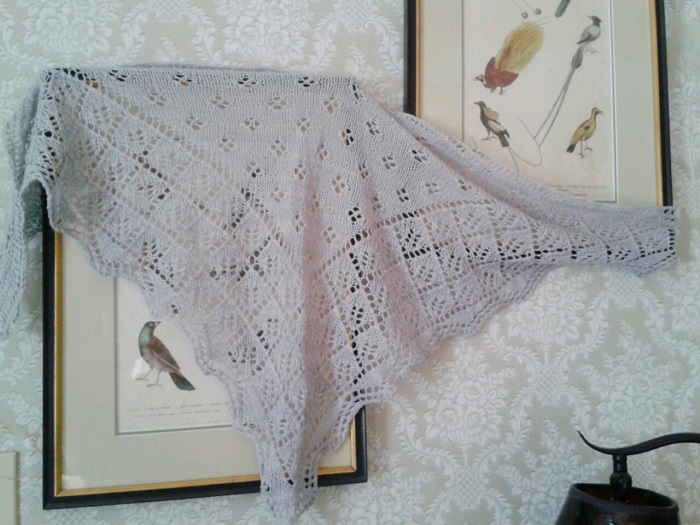
One of my favorite things was this shawlette, made of Jade Sapphire cashmere and silk. I've hardly taken it off since I got it, wearing it like a bandanna around my neck:


The last item, my spoiler considered a failed project. She had bought the fabric to make a reticule for me. Since she couldn't quite pull it off, she sent the uncut fabric. What she didn't know is that I had just returned from JoAnn Fabrics, where I had bought the exact same fabric for myself.  It's like she stalked me so well that she knew what I was going to want even before I knew myself.


Mind blown.